
Can Your San Francisco Backyard Putting Green Withstand Winter?
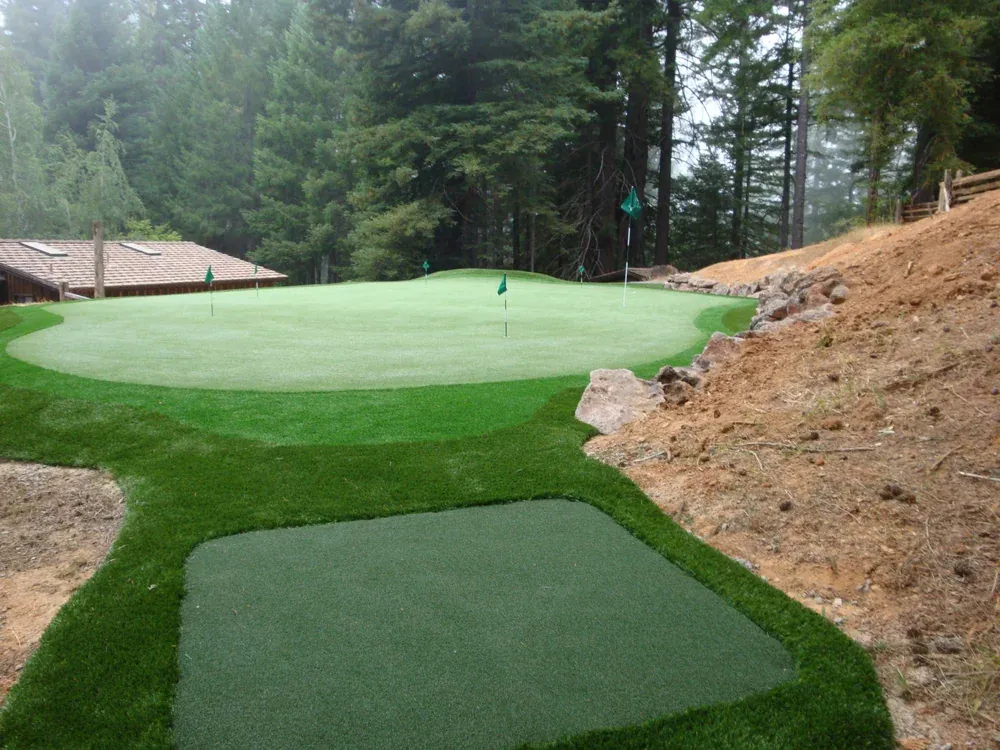
The season's first hard frost typically marks the end of golf season. The season ends, the clubs head to the garage, and your short game grows rusty by spring. A San Francisco backyard putting green fixes that. But if you live somewhere with real winters, you've likely asked yourself whether an outdoor putting green in San Francisco can make it through months of snow, ice, and freezing nights. The short answer: a properly built synthetic turf putting green weathers winter much better than natural grass. Here's how it responds when temperatures drop, and how to maintain it until warmer weather returns.
NATURAL GRASS GOES DORMANT. SYNTHETIC TURF DOESN'T
A natural green fades to brown in winter and demands weeks of recovery work before it putts true again. Frost damage, snow mold, and bare patches come with the territory. Synthetic turf avoids all of that. There's no growing season, so there's nothing to turn dormant. When the snow melts, the green looks and rolls the way it did in October. No reseeding, no fertilizer, and no waiting for it to grow in.
FREEZE-THAW CYCLES ORIGINATE BELOW THE SURFACE
The real winter trial for any outdoor putting green occurs under the turf. When water gathers in the base and freezes, it swells. Allow that happen enough times, and the ground can heave, leaving bumps and dips that ruin your roll. That's why drainage matters so much. A well-constructed green rests on a compacted base with turf that lets water pass straight through. Snowmelt drains down and away instead of puddling and refreezing, so the contours and breaks you built in stay where they belong. A green built on a weak base or poor soil will show the problems by spring. It's one of the most important reasons to work with an experienced installer from the start. [link to SWG installation process page]
WHAT TO DO (AND NOT DO) WHILE CLEARING SNOW
If you want to squeeze in some putting during a dry spell, or you just want the yard cleared, a little upkeep makes a big difference.
Do:
- Grab a plastic shovel or a soft-bristled push broom.
- Allow a thin layer of snow on the surface and let the sun do the rest.
- Use a leaf blower on light, dry snow. .
- Sweep the green once the snow clears to stand the fibers back up and even out any shifted infill.
Don't:
- Grab a metal shovel, ice chopper, or anything with a sharp edge.
- Apply rock salt or chemical ice melt on the turf.
- Shovel snow from the walkway or driveway onto the green.
- Set a snow blower just low enough to graze the surface.
SPRING PICKS UP RIGHT WHERE YOU LEFT OFF
After the weather breaks, most greens require little more than a simple cleaning. Remove leaves and debris, brush the turf, and check for spots where infill has shifted. Then grab your putter. Compare that to a natural green, which can demand weeks of upkeep before it's playable. A synthetic green wins you those weeks back.
MAP OUT YOUR BACKYARD PUTTING GREEN BEFORE THE THAW
Winter is a perfect time to design a backyard putting green. Design, site review, and scheduling can all take place during the off-season, so your installation can land early instead of in the middle of the spring rush. Southwest Greens constructs outdoor putting greens from the base up, with drainage designed for the climate of your site. Reach out to your local Southwest Greens team or call us at 650-349-4885 to start designing yours.